Tuesday, 31 March 2015

(Old) review of The Hunger Games trilogy

This is a translation of the review I wrote on April 10th 2012 for Goodreads:


It is true that I've enjoyed this trilogy VERY MUCH (especially the 3rd part, which is curious given that most fans hate it to infinity and beyond), it is true that it's very addictive and that I've enjoyed reading it BUUUUUUUUUUUT I'm going to analyse a few details and I'll start by spitting out everything I didn't like:

Suzanne Collins
Suzanne Collins can't write. She basically has no idea.

Well, let us be a bit kinder with this poor woman: She can write; there you are a very successful trilogy and I doubt she wrote in a couple of days. But she set her own bar too high and she didn't manage to pass over it. Perhaps she allowed herself to set it higher because of the main theme of the trilogy, much higher than Mrs. Meyers’ bar when she wrote her Twilight saga. Actually, Mrs. Collins had to crawl under the bar more than once (and twice, and thrice). As a reader, you can notice her desperation some times for not knowing how to get out of that huge mess she got into by herself.
She made many mistakes of the type I'll call "the writer who reads something s/he likes and thinks: hehehe-that's-cool-I-wanna-do-that-too". My memory is not very good so I'll just mention some of the mistakes I found most shocking:


**WARNING!!! MAJOR SPOILERS AHEAD!!!**


The rule change half way through the Hunger Games. What the flip is this??? At this point of the novel, I dare to say that most female readers would marry that macho man called Gale and that, in our minds, Peeta is portrayed as a sort of naive and soft boy with no chances whatsoever. You could smell how eager Mrs. Collins was to create a love triangle with the 3 main characters. Hohoho how cool would it be to suddenly change the story to put Katniss under more pressure! BAMMM!!! And Mrs. Collins changes the rules of the game and we find out Peeta is adorable... but only when he speaks or when he has a paintbrush at hand (and that does not only happen in “The Hunger Games”, but also in “Catching Fire” and “Mockingjay”).

The 2nd rule change at the end of “Hunger Games”. You could see it coming since minute 00:00 after the new rules were introduced. To be honest, the fact that it was narrated in the present tense (something I liked very much, 10 points for that, Mrs. Collins) got me thinking during all the novel that Katniss would die in the games and that the narration of the rest of the trilogy would be taken by another character. A girl can dream.

Something I didn't like either was certain characters; characters who seem they're going to be or to do something important... but NO.

Madge: We're not friends but, hey! Yes we are! Isn't Madge lovely, bla, bla... Where is Madge? Where's the baaaaall? I would've married her to Gale in the first half of “Catching Fire”. THAT would have made the story exciting, Mrs. Collins. Resources, Mrs. Collins!!

The red-haired Avox: Who? Oh yeah!!! Half “Hunger Games” seeing her; we're going to be besties because she forgave me. Really? She told you so with that tongue she had cut, didn't she? Now I can't remember you, and in the end... dun dun duuuuun: Do you remember the Avox? Well, she died.

Darius: A sexy ginger who flirts with Katniss. He’s the reason why Gale jumps into the scene. He becomes an Avox, HER Avox, along with the other Avox. This is getting interesting. Do you remember Darius? Well, he got killed just like the other Avox.

Peeta’s parents: This is Mrs. Collins thinking what to do with Peeta’s parents: What do I do? What do I do? Uhm…. I know! They shouldn’t do anything! Dead. The end. Resources, Mrs. Collins!!

Delly: In Mockingjay she’s the only one from District 12 who can talk with Peeta during weeks. Peeta hates Katniss. Peeta is alone with Delly. Alone. HELLO?? Resources, Mrs. Collins!!

Effie Trinket

EFFIE: I don’t want to talk. You get so fond of her… she disappears at mid “Catching Fire” and you obviously think she’s been killed. But no! She wasn’t dead and appears again in the last chapter of Mockingjay… as if nothing ever happened! EXCUSE ME??????

The bow made by Beetee: A bow that only works when she touches it, that has voice recognition, that is flipping amazing, that I’m sure when in battle it has a thousand hidden gadgets… I’m sure you push a button and the A-Team appears. But… nothing. Resources, Mrs. Collins!!


On the other hand, one of the hohoho-how-cool-I-wanna-do-that-too things that many writers find very appealing is killing important characters to cause a highly tragic and emotional scene… like Cinna’s death: It’s one of the few deaths (outside the arena) that I find is very well depicted… even though we never really see him die and that makes us wait for his re-appearance at any moment at the beginning of “Mockingjay”, maybe next to Peeta (though that may be asking for too much). Besides, Cinna’s influence and presence is still there, until the very end of the trilogy. But there are two deaths that make me want to kill Mrs. Collins, both of them totally gratuitous, pointless AND after which no one sheds a single tear: Finnick and Prim.

The flipping annoying cat

Finnick’s death is extremely tragic for all the female fans because he’s a character you fall in love with and you find so sweet when Annie comes back and all that stuff and you think it’s horrible that not even Katniss or Annie show some emotions when he dies (wrong, Mrs. Collins). But Prim?? Let’s see, Mrs. Collins: Prim’s supposed to be the centre of the universe of the trilogy, everything happens because her and for her. Thus, she should be a bit more developed character. We know Prim is adorable, that everybody loves her, and so on and so forth. We know that… because we’re told so, but we NEVER get to see so. The times we get to see more of Prim is when she gets so flipping annoying because she can’t find her cat (which happens at least once in each book, and honestly, I couldn’t care less about that cat). Prim’s appearance at the end of “Mockingjay” is acceptable but, what happens when she dies? Is there a funeral or something? If so many people loved her, why the only thing we know is that Katniss goes crazy (even more), their mom never goes back to District 12, and Peeta (months later) proposes planting roses to honour Prim.

Resources, Mrs. Collins!!

What about Gale? Yeah, ok, he knows her sooooo well that he knows what she thinks just by looking at her, he anticipates her moves, he saves her more than once… but suddenly, when she’s decided to give up on Peeta (yes, yes, I know she had given up on Gale twice… it seems this girl is not very good at predicting), they kiss in the forest (you must admit it’s the best kiss of the trilogy) and… and… BAMMM!!!! The boy has a revelation and realizes that fighting for her is not worth it because she doesn’t love him. And that’s all, folks! No more Gale for you, girl. So you go crazy, your sister dies, you kill the wrong president and get locked in a room for two days, you want to kill yourself… So what? You don’t love me anymore! I better go to another district because I need a job. Personally, I don’t understand Gale.


But well, besides all this (and more details I can’t recall now), I keep grading this trilogy with the highest mark because I liked it VERY MUCH.

As I’ve already said, the fact that the 3 novels are narrated in the present tense is fantastic but I also believe my dear friend Mrs. Collins hasn’t used all her resources wisely (which by now is not very surprising given that we’ve noticed that resources are not exactly what Mrs. Collins is best at).

Another detail to highlight is the incredibly organized structure around number 3:

3 novels divided in 3 parts with 9 chapters each one (3x3). In my opinion, this is a way to remind us that although the story seems very real, it is not. It’s a built fiction (maybe built to reflect the reality we’re living in). It takes realism out, and adds premeditation.

Also, 3 are the games in which Katniss participates, yes, 3: the first ones, organised by the Capitol; the second ones, controlled by the rebels; and the third ones, the war between the Capitol and the rebels. In none of them can we say Katniss has any control over the situation but it’s curious how as her role becomes more and more important, her opinion regarding the games is taken less and less into account.

The games Coin proposes at the end with the children from the Capitol as tributes are different, but I will talk about them a bit more in the next paragraph.


I read a review a girl wrote about “Mockingjay” in which she complained about the action scenes. She was very deceived because in all of them, when Katniss is about to get on the scene, she gets knocked down, she misses everything, and we always end up knowing what happened through other people. That girl thought this was horrendous and it is true that once or twice is ok, but when you realise that is what ALWAYS happens, you can’t help agreeing with that deceived girl. In my opinion, although from the reader’s viewpoint this may seem irritating, it highlights what we already know: that Katniss has nothing under control, ever. The last thing she did because she decided so was volunteering as tribute to replace her sister. She was obliged to do all the rest: taking the role of Prim’s mom, and the father in her family; she admits that if she hadn’t had to go to the games, the logical development of her relationship with Gale would have been marrying him (not because she was in love with him and wanted to marry him but because that was the expected); also her relationship with Peeta is imposed, being the Mockingjay, her clothing, what she does at every moment is out of her control, it’s Haymitch or Effie or whoever else who decides for her; when she decides to kill herself, Peeta doesn’t let her; although she had decided not to have any children, Peeta convinces her to do the opposite… Everything, EVERYTHING is out of her control, why not the battles in “Mockingjay”? Even the games I was talking about before, the ones Coin wants to organise, those which it seems Katniss can control, or at least decide something… Obviously, history repeating, she can’t control anything at all. We’re lucky she decides to kill Coin and does so because after all, she’s the main character, isn’t she?

Another 10 points to Mrs. Collins for this: the little control Katniss has over her life.

To sum up, I think the result is quite good but the development needs to be improved: characters are not deep enough, many open stories, many irrelevant details while there are others much more important that are simply ignored. With all the money Mrs. Collins has earned from these books (and all the money she will get from the films), I suggest her to take a course on creative writing, because she’s writing novels for teenagers and that is not an excuse to not make things right.

Monday, 23 March 2015

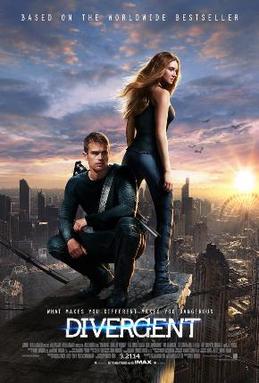
Divergent: the book vs the film

I've just watched Divergent, the film based on the book, and these are my conclusions:


#1: why do I keep on watching film adaptations of books if I know I'm not going to like them?


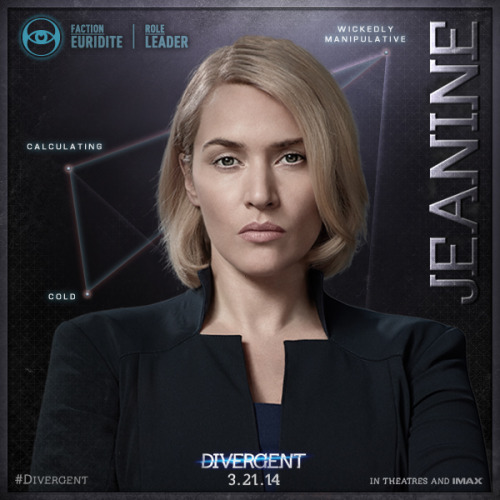
#2: I'm aware that adapting a book into a film is not easy. Scriptwriters have to get rid of minor characters or change certain things. I was ok with most of the changes in the film... Except for the last 40 minutes. What the heck was THAT? And where is Edward? And Marlene? Uriah? And why is Jeanine EVERYWHERE?


#3: I want to congratulate whoever did the casting for this film. Four is pretty much like the one described in the book except for the dark blue eyes. That's exactly how I imagined Marcus, Cristina & Al. But am I the only one who thinks the actors who play Eric & Peter where playing the wrong role, as if whoever gave them their scripts interchanged them?

Peter vs Eric

#4: WHERE IS THE RIVER????

#5: Given the fact that Veronica Roth - the author of the books - is one of the producers of the film, I understand that all these changes have her blessing... Which only adds more confusion to my mind. Did I hear the word "money"?

#6: The guy who plays Caleb (Ansel Elgort) is cute. And yes, I know he's the same guy in The Fault in our Stars... which makes it all a bit weird... but hey! They're actors, right? (Same story with Miles Teller).

The fault in our stars vs Divergent vs The spectacular now


#7: So far we all were aware that James Dean somehow reincarnated in James Franco. But I'd dare to say someone is playing in a lab with their genes and created Theo James. 
JAMES Dean > JAMES Franco > Theo JAMES
I call it the JAMES GENE

#8: I've seen an Amity dressed in green!!!!! 

#9: I thought the phrase "the hem of his shirt" would appear at some point of the film given that in the books it appears an average of 638663429764 times. Also, I thought the emotional importance of Tris saying Four's real name would be present in the film... Taking into account that, in the books, he gets angry when she doesn't call him by his real name. Weird.

#10: A brake? Seriously? One of the things that makes Tris be completely sure that she likes being Dauntless... And it's replaced by a brake???? A BRAKE????

Thursday, 19 March 2015

Divergent: my review

There's probably nothing I can say about this book that hasn't been said before. First of all, I must congratulate Veronica Roth for 1) creating the perfect novel for any teenage girl and 2) making a mash-up of The Hunger Games & the Twilight sagas that works out pretty well. Let me explain.

I'm obsessed with narrators and I tend to judge the quality of a novel by how well the narrator is constructed. In Divergent the narrator is the main character, Tris. So, first person, internal monologue... I call that the "easy narrator". Also, Tris narrates in the present, not the past, which is a positive point for the author because narrating in the present tense is not as easy as it seems. So far, this is the same description for the narrator in The Hunger Games.

Curiously enough, this narrator, along with the main character is, in my opinion, very well designed: designed to be liked by any teenage girl who reads the book. All we know about the character is not too much so any girl can see herself reflected in Tris' thoughts and feelings. If she was more complexly described, she would have a too-defined personality and not every girl would agree with her decisions. Also, the fact that she narrates in the first person makes on the reader the illusion that what she/he is reading, is her/his own thoughts. Clever.


**SPOILER ALERT**


So here we have Katniss Tris, in the reaping ceremony choosing ceremony, and then leaving District 12 the Abnegation Faction to go on a one-week training course on self-defense and knife-throwing. She happens to be better than she thought... And she falls in love with a superhot guy whose chest is like rock (Edward Cullen??) and makes her go dizzy and her legs shake when he looks at her (Edward, is that you?), and he has a terrible secret about his past (I'm pretty sure, you are Edward), and although he, Edward Jacob Peeta Gale Four could have any girl he wants because he's like the perfect man, he chooses to be with Bella Katniss Tris, because you know, she's the main character of the story so he's not allowed to love anyone else.
And then Peeta & Katniss kiss under the rocks in a cave.
And then Edward & Bella kiss between some rocks in the forest.
And then Four & Tris kiss on some rocks next to a waterfall.
Aaawwwwww!!!!

The more I look, the more similarities I find between these sagas. I'd summarize it like this: Divergent= The action of The Hunger Games + The romanticism of Twilight. In 1 word: 

HORMONES!!


Read this review in Goodreads

Thursday, 4 December 2014

Food for thought

I'm living in the UK but I don't have a British background. I'm Mediterranean, I was born in Spain. Although I'm not a proud patriot, I consider myself very fortunate of having grown up in a country where the food is so varied and there are so many different local recipes. Besides, I was raised in a house where eating healthy has always been a priority, even though when I was younger I was incredibly fussy and picky.

My parents were very worried because I used to eat very little and for some time, when I was about 5 or 6 years old, I would even vomit everything I had just eaten. Not because of bulimia but because I didn't like food and my body would automatically reject it. My excuse was always the same: "I don't like it". My parents answer was always the same in turn: "You haven't tried it enough". After all these years I have to admit they were right. Now I never say I don't like something until I've tried it first, and sometimes it's only a question of getting used to a new flavour.

In Spanish schools the lunch break is longer than in the UK. For this reason, it is possible to go home and have lunch there. In my school years, I had lunch at home some years and in school some others. If I have to choose, I'd pick my mom's food, but I can't say the food we were provided in school was not healthy or varied or edible.

Food must be at least edible and nutritious, but if we don't combine it properly, instead of a healthy diet, it will become a sort of slow suicide.

I've been working in a primary school for a month now and can't help being amazed everyday both with the contents of the children's lunchboxes and with the food provided by the school.

I've seen lunchboxes with muffins, chocolates and sweets. ONLY muffins, chocolates and sweets. It's far from unusual to find lunchboxes with jam sandwiches, Nutella sandwiches, sweets, chocolate bars and the drinks are usually fizzy ones or juice with a lot of sugar.

But the school food is not much better: meat is always pork meat (which is nice, but full of fat), legumes are always beans with tomato sauce (which I adore, but they're just full of sugar), pasta is always boiled (just boiled... inedible), veggies are always sweetcorn (full of sugar and fat), or boiled carrots (which they're ok, but if you don't add some salt, oil, pepper or any other added flavour, I know very few people who would like eating them), fish is always fish fingers (which are battered and thus full of fat), and pizza is very common. PIZZA! For goodness sake!

And then there's the pudding. There are not enough words in the world to help me describe what I feel when I see that every day. There's always fruit, but children can choose between fruit and "the other sweet option". So what do you think children usually choose? Exactly: biscuits, jelly, brownie, ice-cream... SUGAR & FAT.

I thought this school was an exception, so I had a look to other school menus in the Internet. I was surprised to find the same pattern in all of them.

I'm honestly really worried because these children must have way too many vitamin deficiencies to say the least. I suggest the responsibles for the lunch food in all schools around the UK to have a look at this basic food pyramid and try to apply it to the menus as soon as possible.


There are many things I absolutely love about the UK, but the way children are fed is definitely not one of them.

Monday, 1 July 2013

Romanticism, time paradoxes and videotapes

Years ago, a teacher in university asked all the students in my class who our favourite British romantic poet was. Most students answered Wordsworth, I said Coleridge. Although Romanticism is definitely my favourite artistic movement, poetry has never been my favourite type of reading. However, Coleridge introduces an element in his poetry that I absolutely love and I don't think Wordsworth used, or at least not as well as Coleridge did: the supernatural.

As I said in my first entry, I consider literature a way of escaping reality and, what could be further from reality than the supernatural? After thinking about the kind of literature and entertainment I generally enjoy the most, I have realized that all those stories placed in a world like ours but with supernatural elements added to it are the ones I usually prefer. Films dealing with the topics of time travel, paradoxes, parallel universes, dystopias and alternative realities are very appealing to me.

Not being actual time-travelling a subject I am particularly interested in, I find it very interesting as a resource for creating entertaining fictional stories. Those plots are like a jigsaw to me and activate my brain and my imagination in a very pleasant way. Call me a freak.

Here you are a list of a few films dealing with these subjects:

BACK TO THE FUTURE (1985): Unlike many other people, I have never considered the films of this saga my favourite films. They are good fun for a Sunday afternoon if you are bored at home. Though I do believe the time paradox is well developed in the three films with the past actions and decisions affecting the future and then creating parallel realities that can be modified by travelling in a time machine/car.
BRAZIL (1985): Pure Terry Gilliam. A dystopian society that resembles ours way too much. This is how we'll end up if we rely too much on computers. Brilliant film. Shocking ending.
LES VISITEURS (1993) / JUST  VISITING  (2001): These two are exactly the same film though the first is the original French version and the second is the American version. Same actors, same gags, but people say the French is brilliant while the American is really bad. I think both of them are VERY FUNNY. A nobleman from the 12th century and his servant need to travel back in time to mend some big trouble they have just caused but they travel to the 20th/21st century by mistake. The cultural/historical clash causes very funny situations.
12 MONKEYS (1995): Brilliant. Bruce Willis is forcely sent to the past to collect information about the virus that contaminated the Earth and killed many people but he's not sure about what he's doing,  why he is there, and the information he finds turns up to be useless. Brad Pitt's performance is one of his best's (you have to love his squint eye), and the ending is probably one of the most logical and deceiving endings ever.
RUN LOLA RUN [LOLA RENNT] (1998): The fourth brilliant film of this list. Pulsating, maybe even frantic (the music does not allow you to relax either). The topic raised is the same as in Sliding Doors, but incredibly well developed. Needless to say, Lola spends the whole film running.
PLEASANTVILLE (1998): A boy and his sister end up in his favourite TV show (black and white, in the 50s, where everything is absolutely perfect... but it really isn't). It starts as a comedy, ends up being a drama, a very original one.
SLIDING DOORS (1998): I love this film because I love John Hannah... and well, the film is ok. A love story, but only in half the film. The story makes you think of those little things you don't even notice but can change your life, in this case, taking a train.
THE THIRTEENTH FLOOR (1999): Apparently, most people consider this film a bad one. I think it's pretty good and the story develops a very original idea. It's quite hard to explain what it is about whithout spoiling it (don't watch the trailer if you don't want to see any spoiler). A virtual simulation of 1937 Los Angeles is created and real people can immerse in that reality as if it was real... or is it not only virtual? This film was released the same year as The Matrix which received a better reception, more awards and more money in the box office although it revolved around a similar topic.
FREQUENCY (2000): A man communicates with his father who died 30 years before using his ham radio. It's a nice story about a father-son relationship intertwined with the investigation of a murder that affects both of them. Let yourself shed some tears while watching it.
MEMENTO (2000): One of the first films by Christopher Nolan. A man who cannot create new memories is trying to find the man that killed his wife. Two timelines: 1 with the sequences in chronological order and black and white, the other in reverse order and colour. This makes you feel like the main character of the film. Very intelligent film. Try not to get lost if you can.
DONNIE DARKO (2001): Nutty psycho guy who can see a scary giant rabbit who tells him to do things. I can't say much more about this film without spoiling it... though if you haven't seen it yet, a bit of spoiling may help you understand the film when you first watch it. Anyway, it's not going to be me, so I'm not going to write what the time-travelling device is.
EQUILIBRIUM (2002): A dystopian society were feelings are illegal and its police do this super Kung Fu called Gun Kata apparently invented by the director and writer of the film (Kurt Wimmer) in his backyard. Visually amazing, with touches of "A brave new world", and one of the best lines ever: Without emotions, without feelings, without love, without hate... breath is just a clock ticking.
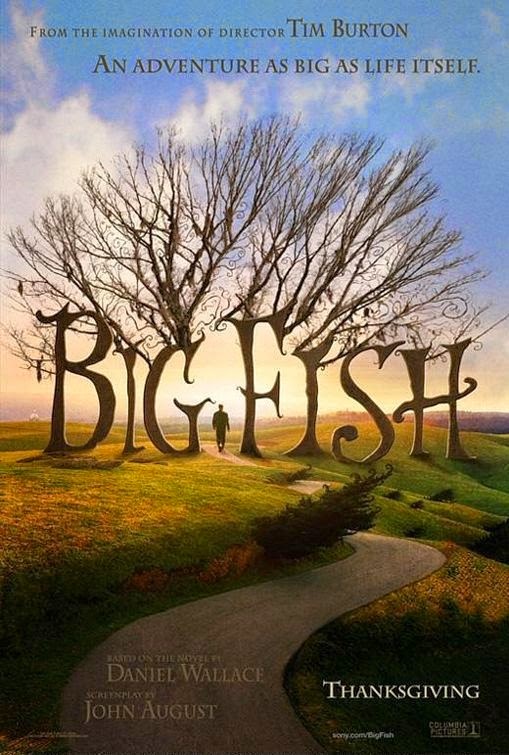
BIG FISH (2003): Tim Burton defending the power of story-telling to coulour up our lives. (Did I just spoil the whole film?) Watch it. Just watch it.
THE MACHINIST (2004): Christian Bale is in the film, I promise. That sort of walking skeleton is him. You may find the film a bit dark and scary, but wait until the end. Jaw-dropping.
THE BUTTERFLY EFFECT (2004): If you are not used to watching this type of films, you may get a little lost with all those back and forth, and the new plots. Some people say there are many inconsistencies in this film, but I think it works out pretty well. Ashton Kutcher playing a quite serious role in which he has the ability of travelling in time when reading his old diaries is unusual but effective.
PRIMER (2004): Brilliant. Probably the best film in this list. Cheap, not a single special effect... And the most not-caring-about-the-audience film I have ever seen. You need to watch it at least 2 or 3 times to understand what's going on (or look for one of the diagrams or explanatory videos in Youtube).
ETERNAL SUNSHINE OF THE SPOTLESS MIND (2004): The fifth brilliant film of the list because of this: Michel Gondry + Charlie Kaufman + great performances. What if we could just erase bad memories to start all over again? Would we make the same mistakes?
THE JACKET (2005): In a way, it reminds of Source Code... and of 12 Monkeys... and of The Butterfly Effect. This time the guy travels to the future to try to mend his past. Claustrophobic. It is supposed to be a thriller but in the end, you feel like you've been told just an anecdote. Worth watching, though.
DÉJÀ VU (2006): Weird. I didn't really enjoy it. There's something in the film that doesn't work out for me. A time-window, a wormhole that only works in one direction and always to the same amount of time to the past (4 days, 6 hours, 3 minutes, 45 seconds and 14,5 nanoseconds), a detective that seems to know more than the scientists. The fact that everything ends up right looks suspicious, maybe it is so because it was supposed to be a commercial film.
THE LAKE HOUSE (2006): A love story between a man and a woman who live in the same house but in different times. The communicate by leaving messages to each other in the mailbox. It's as good as Keanu Reeves and Sandra Bullock performances can be.
TIMECRIMES [LOS CRONOCRÍMENES] (2007): This one takes the idea from Primer (and also the low budget, and the big amount of accolades) but adds some mistery and pink dark characters to the plot. It's a very disturbing film that shows you how the same thing seen from different perspectives can be totally different. It also plays with the idea of fate and free will. It may seem a little slow at times, but is definitely very effective.
NEXT (2007): Incredibly bad film. Stupid plot, stupidly developed. Watch it if you're a fan of Nicholas Cage or Jessica Biel. Don't watch it if you're a fan of Julianne Moore.
THE NUMBER 23 (2007): Scary but quite predictable if you've watched Shutter Island or The Machinist (I won't say anything else not to spoil it). Fantastic Jim Carrey on a serious role.
THE BOX (2009): Watch it and you tell me what it's about.
THE TIME TRAVELER'S WIFE (2009): The lesson you learn from this beautiful romantic film is: don't ever fall in love with a person with the ability to travel in time but has no control over that ability... even if he's Eric Bana.
CORALINE (2009): Oscar nominated animation film based on a book by Neil Gaiman. It sort of reminded me of Tim Burton's work. Deals with the idea of a mirror/parallel universe that is not exactly as good as it seems.
SHUTTER ISLAND (2010): Martin Scorsese's film with Leonardo DiCaprio and Mark Ruffalo. Do I need to say anything else? Watch it. Did I say Mark Ruffalo is in it?
INCEPTION (2010): Another of Nolan's films. This one deals with dreams and how we can access somebody else's mind through their dreams and introducing or stealing ideas. One of my favourite films of this list.
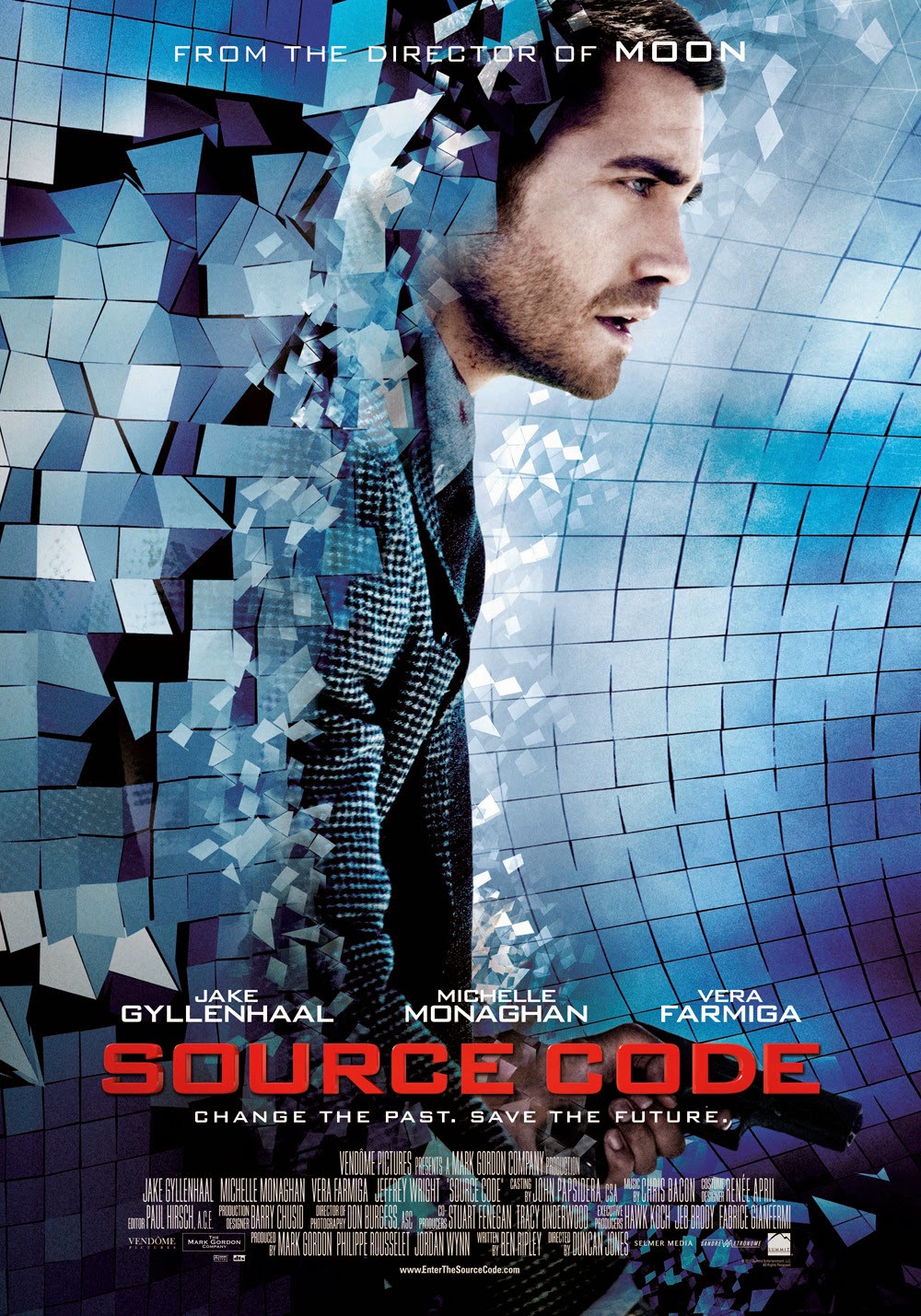
SOURCE CODE (2011): Same 8-minutes scene over and over again, with a little more information each time. Fantastic... except that annoying ending. Personally, I think the rhythm that has been constant along the film is lost in the end, maybe because one has got too used to the same scene and suddenly it changes. Very good film anyway.
THE ADJUSTMENT BUREAU (2011): One of those weird films in which you understand everything and nothing at the same time. You think you're following the story but you keep thinking you are skipping some point. In the end... well, I know the film is about predestination and a greater plan... but I don't really see the point. Some people hate me for not liking this film.
MIDNIGHT IN PARIS (2011): I'm not a big fan of Woody Allen but I adooooore this film. You need to know names like Ernerst Hemingway, Scott Fitzgerald or Luis Buñuel to really get how brilliant this film is. Adrien Brody playing Salvador Dalí is magnificient to say the least. Watch him here.
CLOUD ATLAS (2012): The Wachowski Brothers (sorry, Andy and Lana) + Tom Twyker with an amazing cast and 6 different stories... Back and forth... Reincarnation? Enough said. Watch it.
TRANCE (2013): An excellent film by Danny Boyle with an excellent cast as well. In a sense, it is similar to Inception because it also deals with introducing and stealing ideas from someone else's mind, though this time is through hypnosis. An unexpected ending makes you reconsider the main theme of the film and see it from a completely different point of view.
ABOUT TIME (2013): Domhnall Gleeson being adorable as usual. You may think it's another time-travelling/romantic film with Rachel McAdams... but wait until the end and you'll find out what it really is about.


And here my list ends. I know there are many other films related to these themes, so any recommendation is always very welcome. Feel free to suggest!